World Sight Day · 8 October 2026
Love your eyes: see what −6.00D looks like
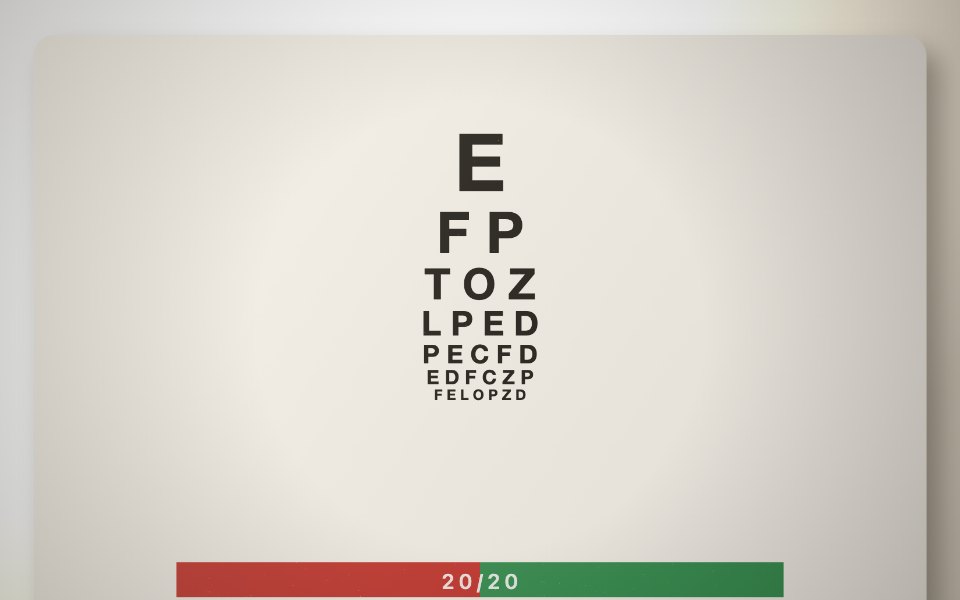
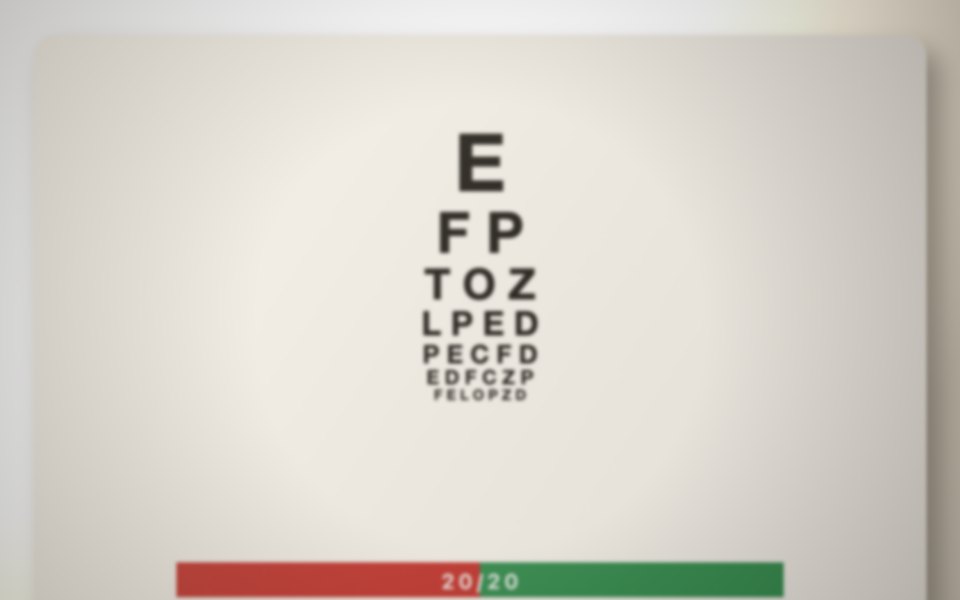
World Sight Day 2026 asks for stories and pledges rather than statistics, so here is a story you can run in ten seconds: the chart opens at −6.00D, the bottom line has already gone, and the slider takes you anywhere in a real prescription range.
Three things to do with it
World Sight Day is the second Thursday of October, led by the International Agency for the Prevention of Blindness. The 2026 campaign puts stories, lived experience and community action at the centre — and its own resource kits name two audiences directly: Love Your Eyes Kids and Love Your Eyes at Work.
The page opens at −6.00D: the bottom line has already gone. Drag it back to −0.50D and the room comes into focus — the difference between “can't see the board” and “isn't paying attention”, in one gesture.
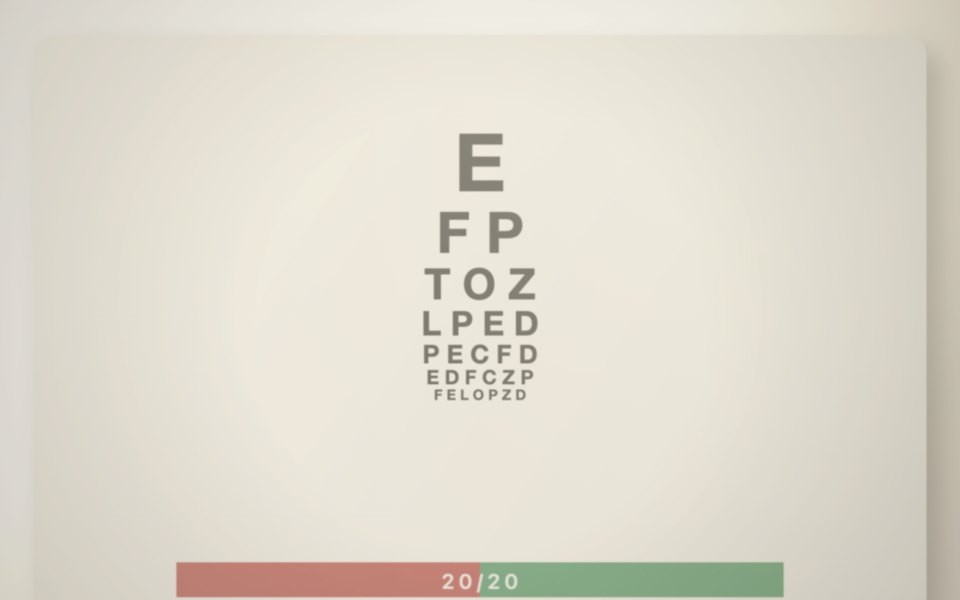
Switch to cataract and glaucoma: glare spreads and the edges close in. Useful when explaining why an afternoon of screens feels the way it does.
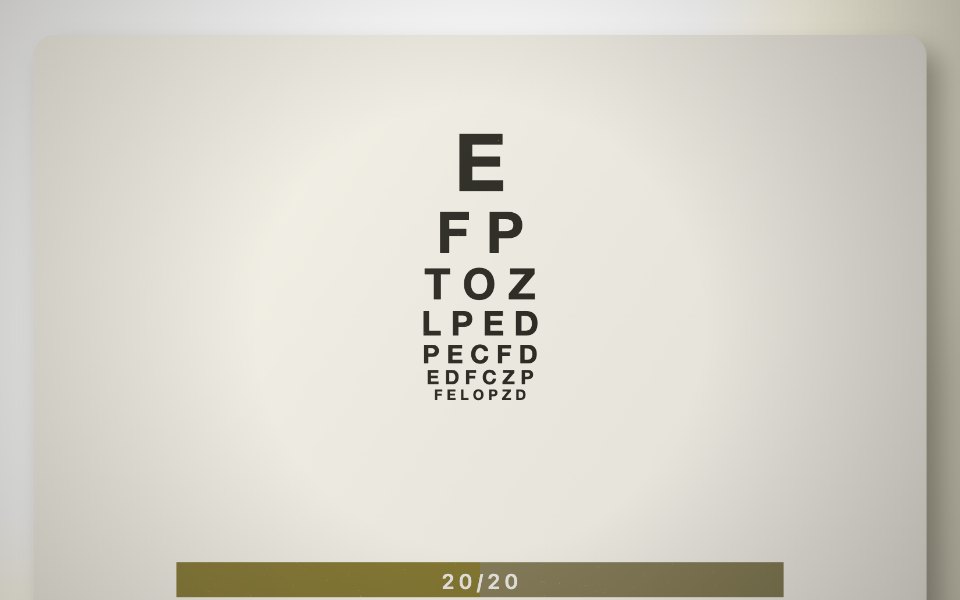
Roughly 1 in 12 men and 1 in 200 women have a colour vision deficiency, and most never mention it. Load a screenshot and check whether any state is carried by hue alone.
What −6.00D looks like
The slider runs from −0.50D to −8.00D, so you can stop anywhere in a real prescription range. Blur grows roughly with the defocus distance, which is why the jump from −2.00D to −4.00D is far more visible than −0.50D to −2.50D. Watch the last line at each step: the point where it disappears is usually the point where someone stops asking questions.
Watch it
Thirty-three seconds, and every frame comes out of the same engine that runs above — rendered at −6.00D and the conditions beside it, so nothing here is a mock-up of something the tool cannot actually do.
Read the script
- This is what a minus six prescription looks like.
- One in three children and teenagers is short-sighted now. In nineteen ninety it was one in four.
- A cataract does not blur the picture. It drops contrast, and every light becomes a veil.
- Glaucoma takes the edges first, which is why it is usually noticed late.
- One chart. Four ways of seeing.
- World Sight Day is the eighth of October. Try it with your own photo. SightFrame, free on the App Store.
Do this on 8 October
Run one of the checks above on your own photo, then hit Download comparison card and post it with #WorldSightDay and #LoveYourEyes. IAPB is collecting pledges to #LoveYourEyes ahead of November's Global Summit for Eye Health — five million of them.
Want the dioptre dial and the live camera in your pocket? SightFrame.
The same scene through other eyes
Frequently asked questions
- When is World Sight Day 2026?
Thursday 8 October 2026 — the second Thursday of October, led by the International Agency for the Prevention of Blindness under the campaign #LoveYourEyes, ahead of November's Global Summit for Eye Health. - What does −6.00D look like?
That is a strong short-sight prescription. Drag the slider above and watch the bottom of the chart go first — the last line disappears long before the top one. Blur grows roughly with the defocus distance, so −2.00D to −4.00D is a much bigger jump than −0.50D to −2.50D. - Is this an eye test?
No — this is not an eye test. It renders the blur a given prescription produces; it cannot measure your eyesight, and it must not replace an examination by an optometrist or ophthalmologist. If the last line is disappearing in real life, book one. - Why does colour vision belong on World Sight Day?
Roughly 1 in 12 men and 1 in 200 women have some form of colour vision deficiency, and most of them will never mention it. Load a screenshot of your interface in the colour filters above and check whether any state — success, error, required — is carried by hue alone. - Is anything I upload stored?
No. The simulation runs in your browser with Canvas; no photo leaves your device and nothing is saved.
Related tools
SightFrame: Vision Simulator
Simulate myopia, astigmatism, cataract, glaucoma and colour vision deficiency with your own camera — free on the App Store.